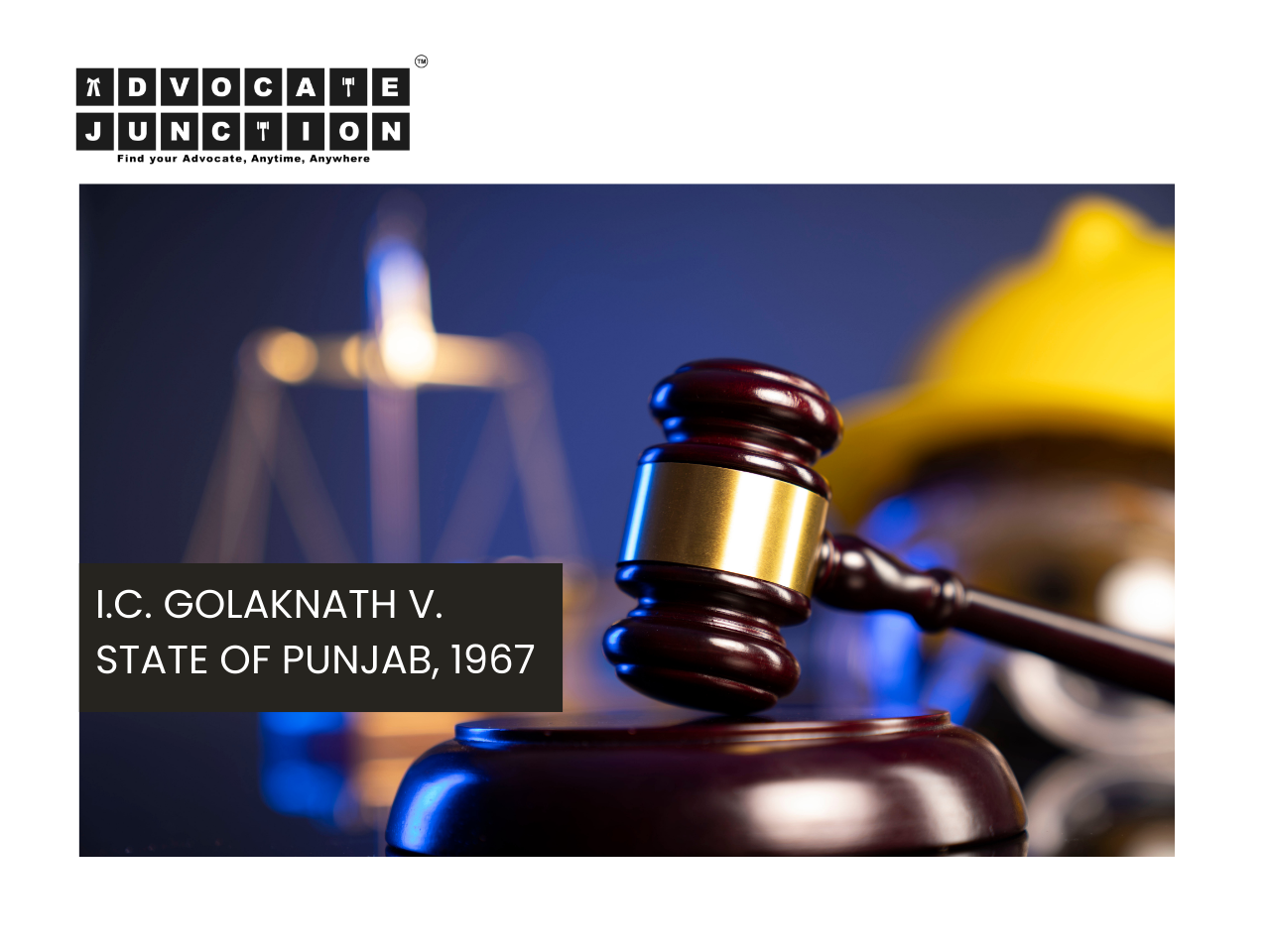
FACTS The Golaknath family owned 500 acres of farmland. However, under the Punjab Security and Land Tenure Act, 1953, the government restricted their ownership, allowing them to retain only a specified portion. The family challenged this decision by filing a petition under Article 32 of the Indian Constitution, arguing that their fundamental rights under Article 19—the right to acquire property and practice any profession—were violated. They further contended that the constitutional amendment placing the Punjab Act in the Ninth Schedule was ultra vires.
QUESTIONS OF LAW
- Whether a constitutional amendment qualifies as a law under Article 13(2), which prohibits laws that infringe fundamental rights?
- Whether fundamental rights can be amended by Parliament?
HELD
The Supreme Court ruled in favor of the petitioners, holding that:
- Nature of Constitutional Amendments: Article 368 of the Constitution only prescribes the procedure for amending the Constitution. The power to amend emanates from Articles 245, 246, and 248, which grant Parliament the power to make laws. Therefore, every amendment must be considered a “law.”
- Amendments Must Pass the Test of Article 13(2): Since an amendment is a form of law, it must comply with Article 13(2), which prohibits laws that infringe upon or abridge fundamental rights. Any amendment that seeks to curtail fundamental rights is, therefore, unconstitutional.
- Primacy of Fundamental Rights: The Court emphasized the transcendental position of fundamental rights, describing them as primordial rights essential for human development. These rights enable individuals to live freely and autonomously, and the Constitution explicitly safeguards them from legislative encroachment.
- Limitations on Parliamentary Power: The Court ruled that Parliament cannot amend fundamental rights, ensuring their protection from legislative modifications. It held that the only permissible restrictions on fundamental rights are those imposed by a valid law deemed reasonable and in the public interest.
- Impact on Future Amendments: The ruling effectively curtailed Parliament’s power to amend fundamental rights, leading to a significant shift in Indian constitutional law. However, this decision was later overruled in Keshavananda Bharati v. State of Kerala (1973), where the Supreme Court introduced the Basic Structure Doctrine, allowing Parliament to amend fundamental rights as long as it did not alter the Constitution’s basic structure.
Significance of the Judgment
The I.C. Golaknath case was a landmark ruling that reinforced the supremacy of fundamental rights. It placed constitutional amendments within the ambit of judicial review, limiting Parliament’s authority. Although later modified, this case laid the groundwork for the Basic Structure Doctrine, shaping the evolution of constitutional interpretation in India.