FACTS
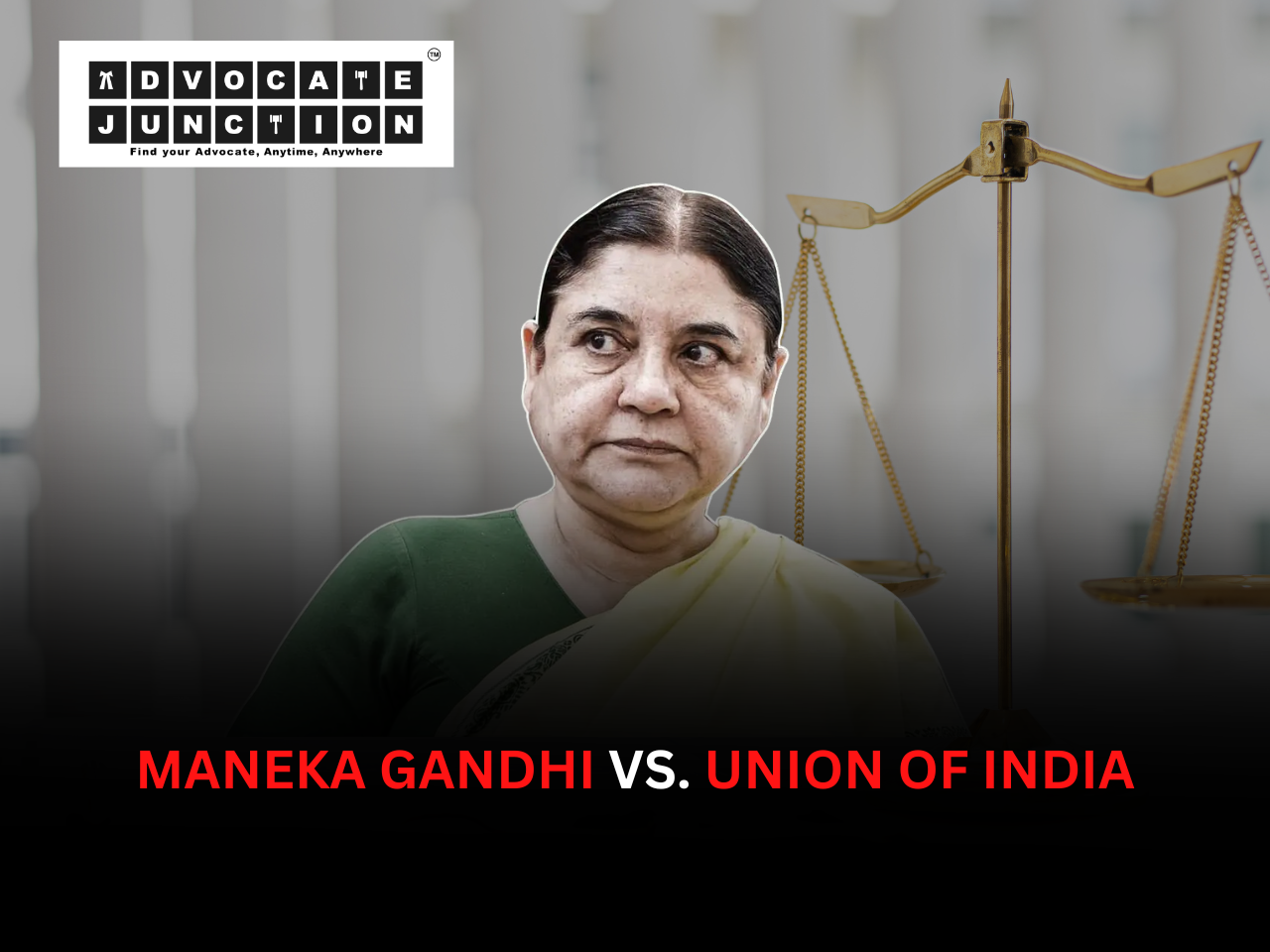
The Regional Passport Office, Delhi, issued a letter to Maneka Gandhi, requiring her to submit her passport within seven days. The letter cited ‘public interest’ as the reason for impounding her passport. Upon requesting a detailed ‘Statement of Reasons’ for this action, the Ministry of External Affairs informed her that there were orders not to disclose this information. In response, Maneka Gandhi filed a writ petition under Article 32 of the Constitution, contending that the order violated Article 21, which guarantees the right to personal liberty.
QUESTIONS OF LAW
- Does the right to travel abroad form a part of the right to personal liberty guaranteed under Article 21?
- Does the Passport Act, 1967, prescribe a ‘procedure’ as required under Article 21 before depriving a person of this right?
- Is Section 10(3)(c) of the Passport Act violative of Articles 14, 19(1)(a), and 21 of the Constitution?
- Does the impounding of the passport violate the principles of natural justice?
HELD
The Supreme Court ruled that any procedure depriving individuals of their right to life and liberty must be fair, just, and reasonable, and not arbitrary, fanciful, or oppressive. It held that:
- Right to Travel Abroad: The Court affirmed that the right to travel abroad is encompassed within “personal liberty” under Article 21, thereby making it a fundamental right.
- Procedural Fairness: Any procedure that curtails personal liberty must meet the tests of fairness, justice, and reasonableness, and cannot be arbitrary or oppressive.
- Validity of Section 10(3)(c) of the Passport Act: The Court upheld the validity of this provision but emphasized that it must be used sparingly and with great caution to prevent misuse.
- Judicial Scrutiny of Reasons: The Court ruled that passport authorities cannot withhold reasons for impounding a passport if the sole intent is to evade judicial scrutiny.
- Interplay of Fundamental Rights: The Court emphasized that Article 21 does not operate in isolation; any law affecting personal liberty must also satisfy the tests of Article 19 (freedom of speech and expression, profession, etc.) and Article 14 (right to equality).
- Unconstitutional Orders: If an order under Section 10(3)(c) of the Passport Act is passed with the intention of curtailing freedom of speech and expression or the right to carry on a profession, such an order would be deemed invalid.
This judgment significantly expanded the scope of Article 21, reinforcing that no law or executive action can arbitrarily restrict an individual’s fundamental rights. The case became a cornerstone for the doctrine of due process in India, ensuring that the deprivation of personal liberty is subject to constitutional safeguards.