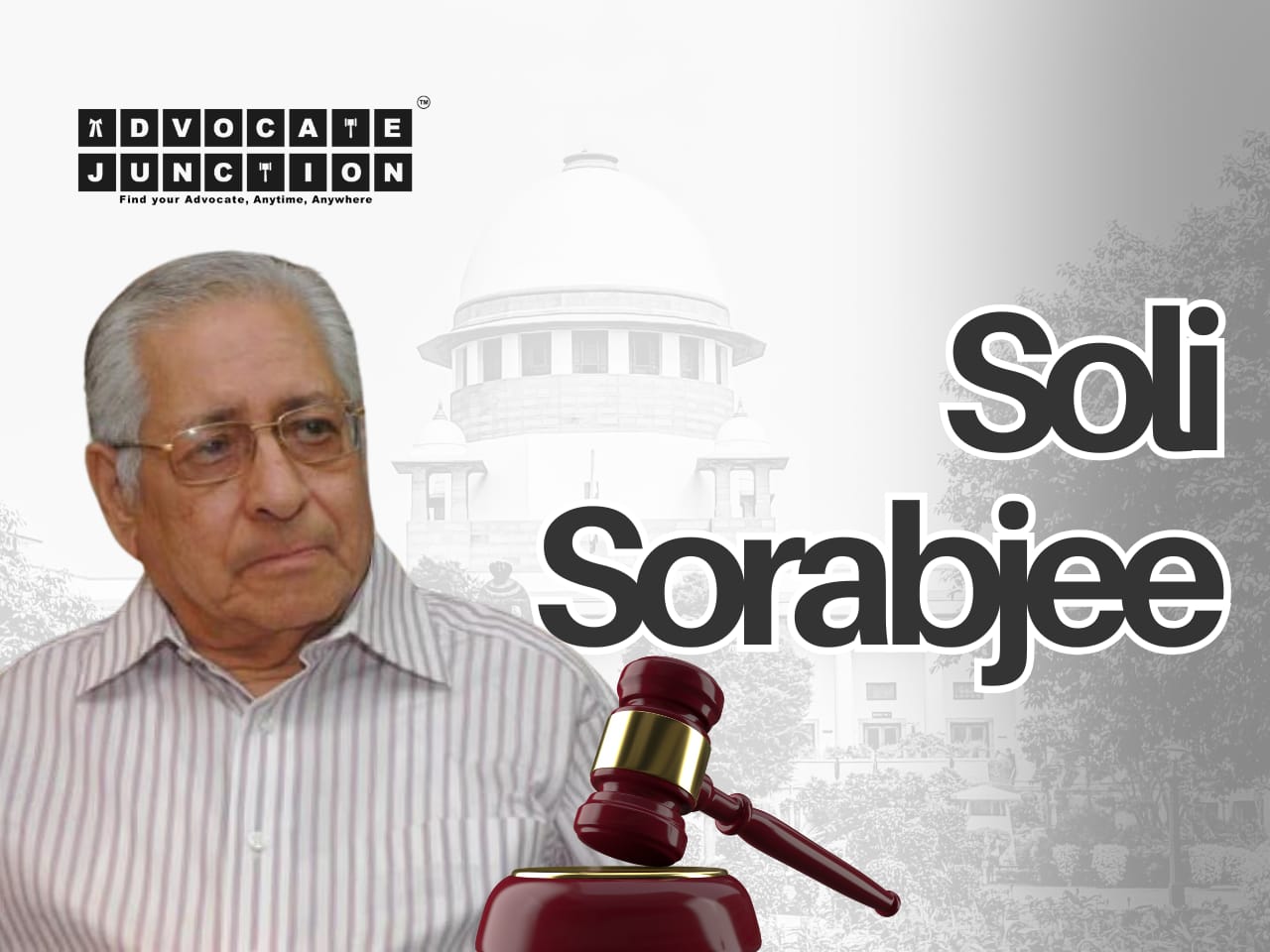
Soli Jahangir Sorabjee was a distinguished Indian jurist, constitutional expert, and human rights advocate, best known for his tenure as Attorney General of India and his relentless defense of freedom of expression and civil liberties. He was honored with the Padma Vibhushan, India’s second-highest civilian award, for his contributions to human rights protection and constitutional law.
Early Legal Career and Contributions
Sorabjee began his illustrious legal career at the Bombay High Court, where he was designated as a Senior Advocate in 1971. His legal acumen and deep understanding of constitutional law soon earned him a national reputation.
During the Emergency (1975–1977), Sorabjee fearlessly provided pro bono legal services to political prisoners who were unlawfully detained. His unwavering commitment to civil liberties and human rights made him a beacon of legal resistance during this period of curtailed freedoms.
Post-Emergency, he played a pivotal role in the Citizens’ Justice Committee, which provided legal representation to the victims of the 1984 anti-Sikh riots in Delhi, ensuring justice for those affected by the tragic violence.
Landmark Constitutional Cases
Soli J. Sorabjee was involved in several landmark Supreme Court cases that shaped the interpretation of the Indian Constitution. His contributions alongside legal luminaries like Fali S. Nariman were instrumental in defining key constitutional doctrines. Some of the most notable cases include:
- Kesavananda Bharati v. State of Kerala (1973): This historic case led to the formulation of the “Basic Structure Doctrine,” which held that Parliament cannot amend the fundamental principles of the Constitution. Sorabjee played a crucial role in advocating for constitutional integrity.
- Maneka Gandhi v. Union of India (1978): As Solicitor General of India, he was part of the legal delegation in this case, which expanded the interpretation of Article 21, establishing that the right to personal liberty cannot be curtailed without due process.
- S.R. Bommai v. Union of India (1994): This case imposed strict limitations on the President’s rule, reinforcing federalism by ensuring that state governments could not be arbitrarily dismissed.
- I.R. Coelho v. State of Tamil Nadu (2007): This judgment affirmed that laws placed under the Ninth Schedule of the Constitution were subject to judicial review, reinforcing the supremacy of fundamental rights.
- Shreya Singhal v. Union of India (2015): Sorabjee aided the petitioner in striking down Section 66A of the IT Act, which had placed unconstitutional restrictions on online speech. The ruling was hailed as a victory for free speech in the digital age.
Attorney General of India and International Recognition
Sorabjee served multiple terms as Attorney General of India, where he played a crucial role in shaping India’s legal landscape and upholding constitutional values. His legal expertise was not confined to India alone—he was an influential figure in international human rights law.
In March 2006, in recognition of his contributions to India-Australia legal relations, he was appointed an Honorary Member of the Order of Australia (AM), a rare honor for a foreign jurist.
Legacy and Impact
Soli J. Sorabjee’s legacy is one of fearless advocacy, constitutional integrity, and human rights protection. His sharp legal mind, eloquence, and unwavering commitment to justice left an indelible mark on Indian jurisprudence. Throughout his career, he remained a staunch defender of democracy, free speech, and individual liberties.
His legal contributions continue to shape India’s constitutional discourse, inspiring generations of lawyers, scholars, and policymakers.