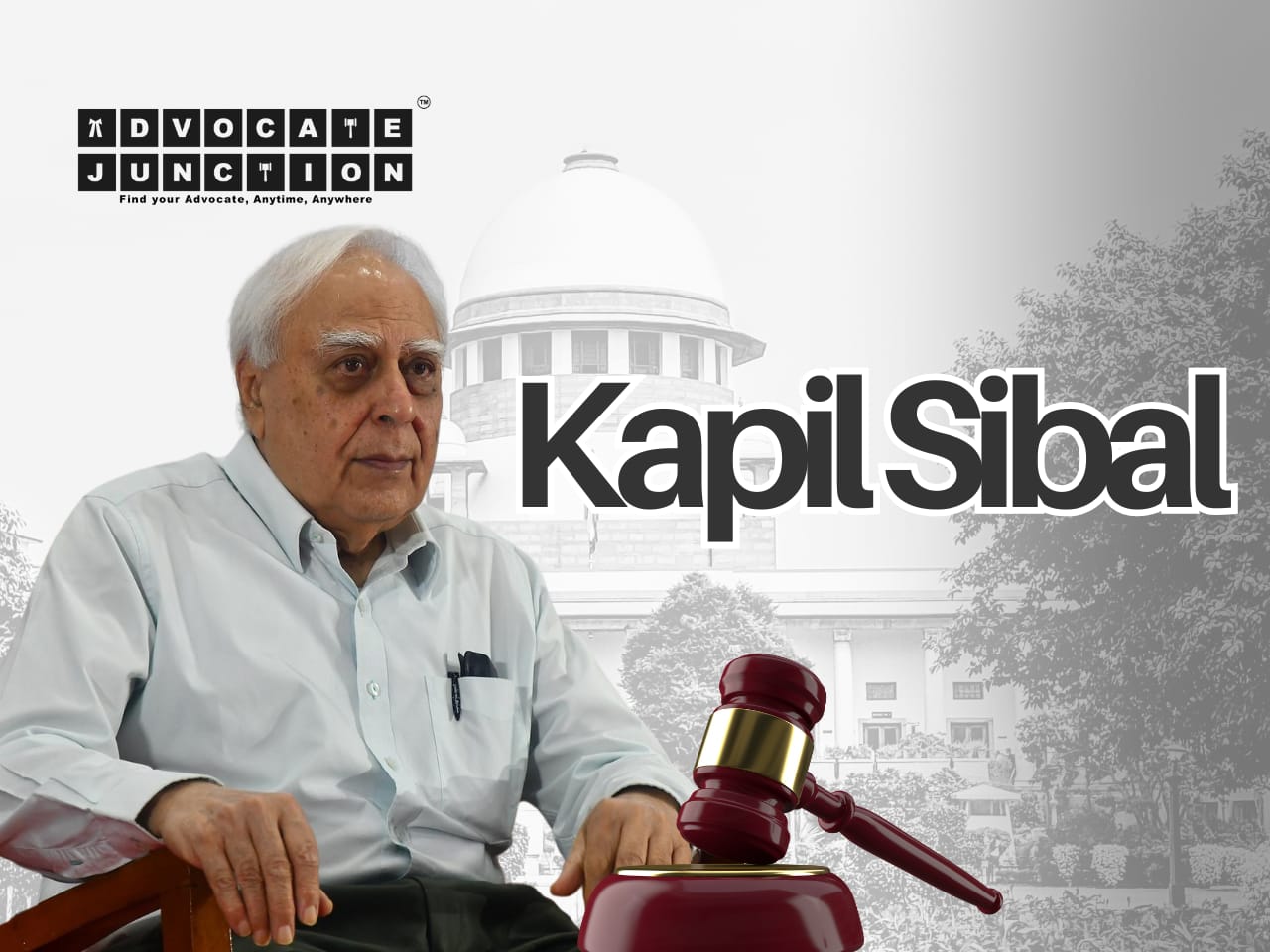
Kapil Sibal is a distinguished Indian lawyer, politician, and constitutional expert known for his contributions to Indian jurisprudence and governance. With an illustrious legal career spanning over five decades, he has played a pivotal role in several landmark cases and policy decisions in India.
Education and Early Legal Career
Kapil Sibal earned his law degree from the University of Delhi and later pursued further studies at the Harvard Law School, where he gained international legal exposure. He briefly practiced law on Wall Street, gaining valuable experience in global legal frameworks.
Returning to India, Sibal joined the Bar Council in 1972 and established his independent legal practice. His expertise in constitutional law and litigation quickly gained recognition, leading to his designation as a Senior Advocate by the Delhi High Court in 1983.
In 1989, he was appointed as the Additional Solicitor General of India, serving in that capacity until 1990, where he represented the Indian government in high-profile cases before the Supreme Court.
Legal Contributions and Notable Cases
Kapil Sibal is regarded as a specialist in constitutional law and has been involved in several landmark cases before the Supreme Court of India.
Some of his most notable legal representations include:
- Triple Talaq Case (Shayara Bano v. Union of India, 2017): Sibal represented the All India Muslim Personal Law Board (AIMPLB), arguing in favor of the constitutional validity of triple talaq, citing religious and personal law autonomy. However, the Supreme Court ultimately ruled against the practice, declaring it unconstitutional.
- Right to Privacy Case (K.S. Puttaswamy v. Union of India, 2017): Sibal was part of the legal team that successfully argued for the recognition of the right to privacy as a fundamental right under the Indian Constitution. This landmark judgment had far-reaching implications on data protection and individual freedoms in India.
Role in the Supreme Court Bar Association
A well-respected figure in the legal fraternity, Kapil Sibal has been elected President of the Supreme Court Bar Association (SCBA) multiple times. He held this position in 1995, 2001, and 2002, and was once again elected as SCBA President for the 2024–25 term. His leadership in the Bar Association has been instrumental in upholding the independence of the judiciary and advocating for legal reforms.
Political Career and Governance
Beyond the courtroom, Kapil Sibal has been an influential political figure. In 1998, his legal expertise and reputation led to his nomination to the Rajya Sabha (Upper House of Parliament) as a Congress representative from Bihar.
He became a key troubleshooter for the Indian National Congress (INC) and played a vital role in legislative negotiations. Notably, in 2012, he led the UPA government’s negotiations on India’s first anti-corruption bill, working to create a consensus with civil society groups. That same year, he initiated reforms to the Information Technology Act, 2000, after widespread public outcry over its provisions enabling social media censorship. His intervention led to stricter regulations on government powers regarding online content monitoring.
Independent Political Journey
Despite being closely associated with the Congress Party for decades, Kapil Sibal resigned from the INC in 2022 and filed his nomination for the Rajya Sabha as an independent candidate, backed by the Samajwadi Party. His departure marked a significant shift in his political journey, reflecting his independent stance on legal and policy matters.
Legacy and Influence
Kapil Sibal is widely regarded as one of India’s foremost legal minds and orators. His sharp arguments, both in the courtroom and in Parliament, have made him a key figure in shaping India’s legal and political landscape. With an exceptional ability to navigate complex constitutional matters, he continues to influence policy, law, and governance in the country.