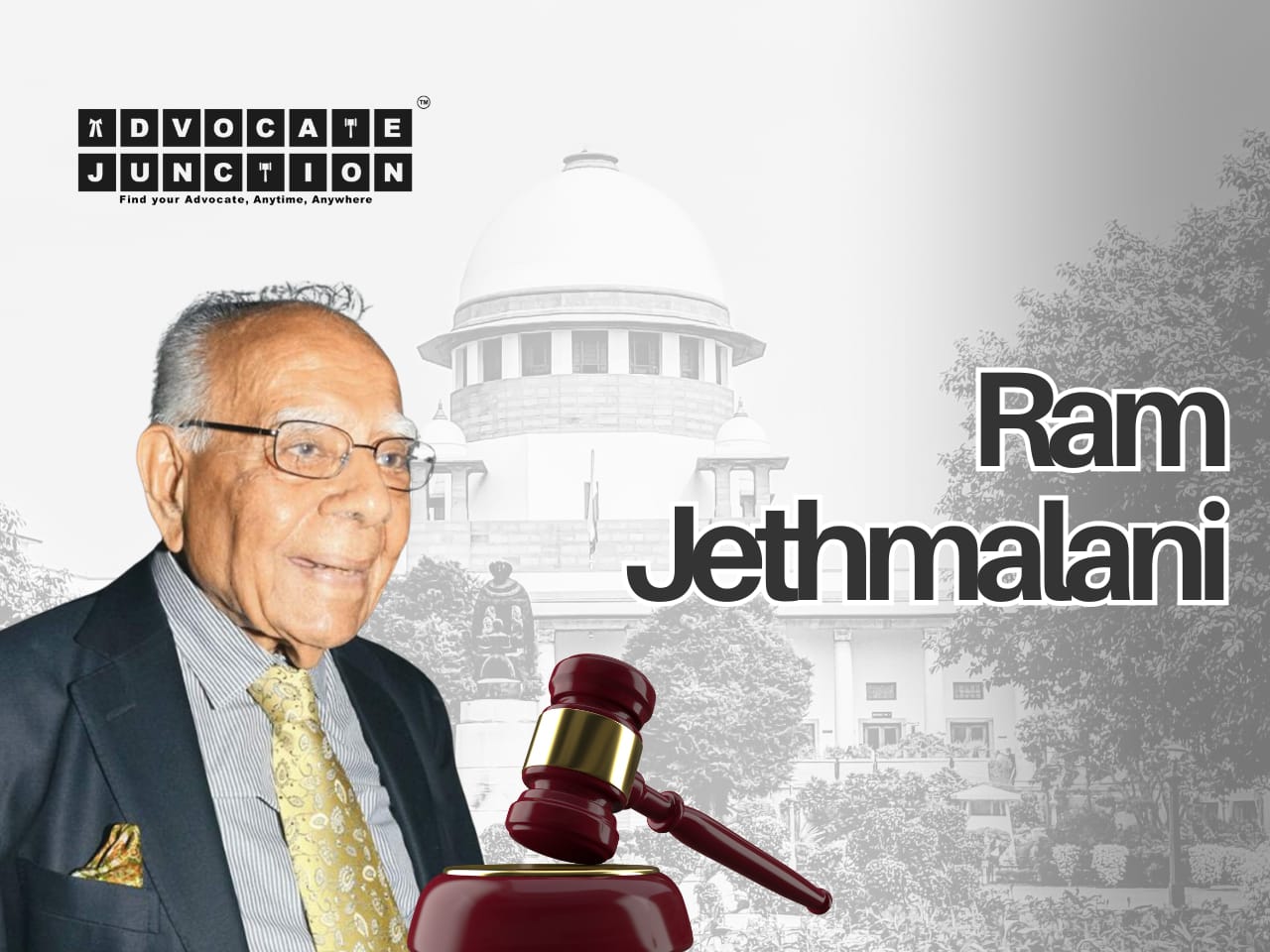
Ram Jethmalani’s journey in the legal profession began before India’s partition, both as a lawyer and a professor. He co-founded his own law firm in Karachi with his friend A.K. Brohi, who was seven years his senior. However, in February 1948, when riots broke out in Karachi, Jethmalani fled to India on Brohi’s advice. With merely ₹10 in his pocket, he found refuge in a camp for several days, marking the beginning of his extraordinary legal career in India.
A Trailblazer in the Legal Arena
Jethmalani’s first case in India was against the Refugee Act, which he argued treated refugees inhumanely. He challenged the Act before the Bombay High Court, successfully securing a verdict that recognized the constitutional rights of displaced individuals.
His legal acumen was further showcased in 1959 when he appeared in the landmark K.M. Nanavati v. State of Maharashtra case alongside Y.V. Chandrachud, who later became the Chief Justice of India. Over time, his defense of individuals involved in smuggling cases earned him the title of “the smugglers’ lawyer,” a label he dismissed by emphasizing his duty as a legal professional.
High-Profile Cases
Throughout his career, Jethmalani was involved in several landmark cases, including:
- K.M. Nanavati v. State of Maharashtra (1962)
A sensational case that brought Jethmalani into national prominence, it involved naval officer K.M. Nanavati, who was tried for murdering a businessman suspected of having an affair with his wife. Jethmalani’s defense played a crucial role in the case, which ultimately led to the abolition of the jury system in India.
- Kehar Singh & Another v. Union of India (1988)
Jethmalani defended Kehar Singh, one of the accused in the assassination of Prime Minister Indira Gandhi. The Supreme Court upheld the power of the President under Article 72 of the Indian Constitution to grant pardon, emphasizing its discretionary nature.
- Harshad Mehta Securities Scam (1992)
Jethmalani represented Harshad Mehta, the infamous stockbroker embroiled in one of India’s biggest financial frauds. His arguments exposed regulatory loopholes and the complexities of financial transactions, bringing much-needed scrutiny to the country’s financial governance.
- Manohar Joshi v. Nitin B. Patil (1995)
A case that shaped the interpretation of Hindutva in political discourse, Jethmalani argued that Hindutva was a way of life rather than a religion. The Supreme Court concurred, ruling that references to Hindutva in political campaigns did not necessarily constitute a corrupt electoral practice.
- State (NCT of Delhi) v. Syed Abdul Rehman Gilani (2004)
Jethmalani defended Syed Abdul Rehman Gilani in the Parliament attack case. His sharp legal arguments led to the acquittal of the accused, highlighting the importance of a fair judicial process even in cases of national security.
- Arun Jaitley v. Arvind Kejriwal (2017)
Jethmalani represented Delhi Chief Minister Arvind Kejriwal in a high-stakes defamation case filed by then Finance Minister Arun Jaitley. The case made headlines due to Jethmalani’s direct and often fiery courtroom exchanges, adding to his reputation as an unfiltered and fearless advocate.
A Legal Titan with an Unparalleled Legacy
Ram Jethmalani was not just a lawyer but an institution in himself. His legal brilliance, unwavering commitment to justice, and fearless advocacy left an indelible mark on Indian jurisprudence. His career, spanning over seven decades, is a testament to his unparalleled legal prowess, making him one of the most influential figures in India’s legal history.