FACTS
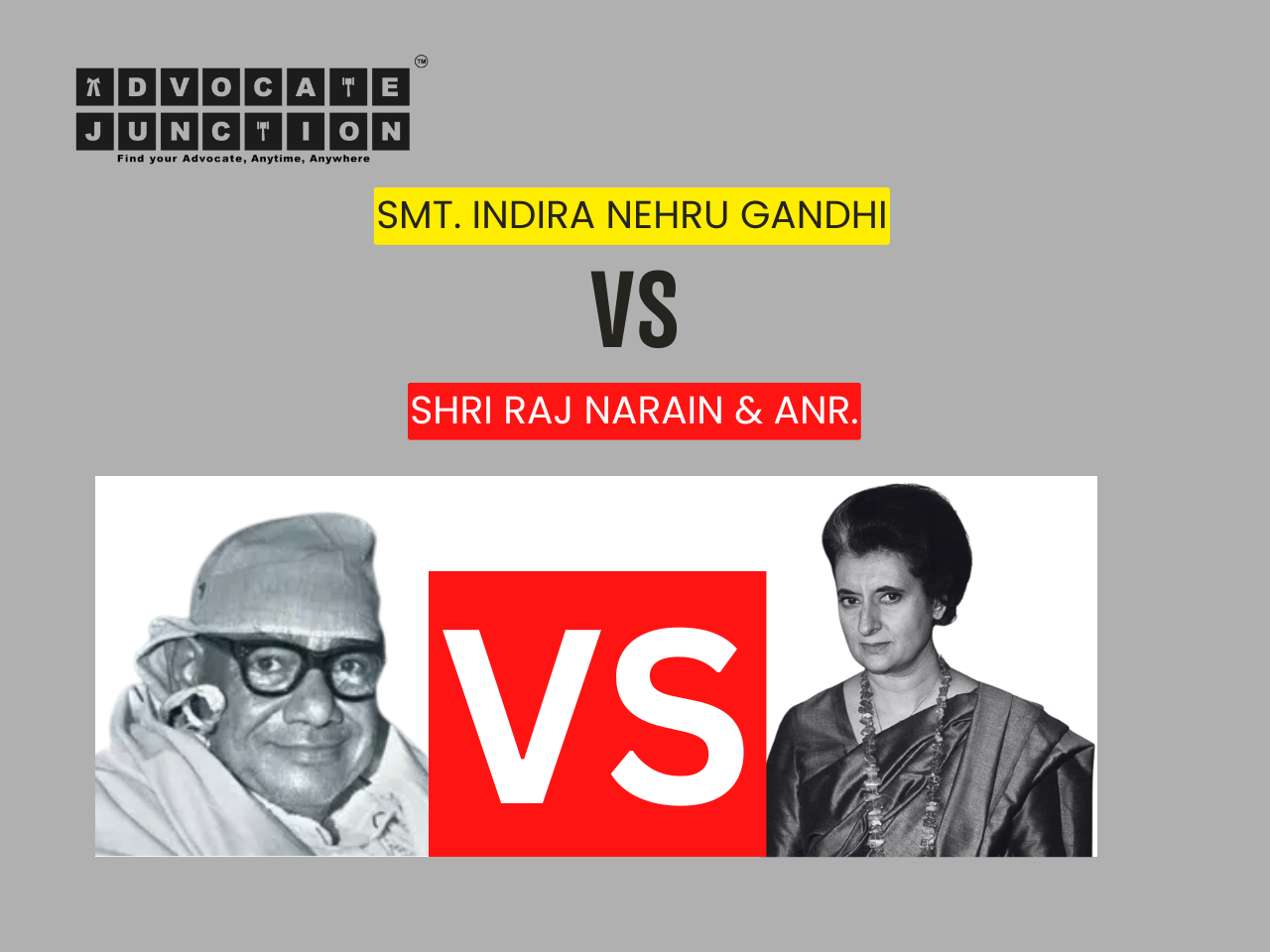
This landmark case arose from an appeal against the verdict of the Allahabad High Court, which had invalidated the election of Smt. Indira Gandhi on the grounds of corrupt practices. In response to this legal setback, Parliament enacted the 39th Constitutional Amendment, introducing Article 329A into the Constitution of India.
Clause (4) of Article 329A stipulated that the elections of the Prime Minister and the Speaker could not be challenged in any court of law across the country. Instead, any dispute regarding these elections could only be adjudicated by a parliamentary committee specifically constituted for this purpose. This amendment was widely perceived as an attempt to shield the Prime Minister from judicial scrutiny and disrupt the democratic process.
QUESTIONS OF LAW
The primary constitutional questions before the Supreme Court were:
- Whether Clause (4) of Article 329A violated the principle of equality enshrined in the Indian Constitution.
- Whether this provision undermined the doctrine of judicial review, a fundamental aspect of the Indian legal framework.
- Whether excluding judicial review in election disputes threatened the integrity of free and fair elections.
HELD
The Supreme Court struck down Clause (4) of Article 329A, declaring it unconstitutional. The Court ruled that the provision directly violated the fundamental principle of free and fair elections, an essential feature forming part of the Basic Structure of the Indian Constitution. The exclusion of judicial review from election disputes was deemed an affront to the core democratic values of the nation.
Furthermore, the Court held that Clause (4) of Article 329A was an outright denial of the Right to Equality enshrined under Article 14. The provision was considered arbitrary and detrimental to the Rule of Law, which forms the bedrock of the Constitution.
Justice H.R. Khanna, in his reasoning, reaffirmed that democracy is an intrinsic part of the Basic Structure of the Constitution, which inherently includes the principle of free and fair elections. Any law that seeks to erode this foundation is constitutionally impermissible.
In this case, the Supreme Court expanded the list of Basic Features originally laid down in the Keshavananda Bharati Case, adding the following essential principles:
- Rule of Law
- Democracy, which implies free and fair elections
- Judicial Review
- Jurisdiction of the Supreme Court under Article 32
This ruling not only reaffirmed the sanctity of the electoral process but also reinforced the supremacy of the judiciary in upholding constitutional values, safeguarding democracy, and maintaining the delicate balance of power within the Indian polity.